English
 Français
 Español
 Português
Two things, not one
The Visitor Accommodation (Register and Levy) Etc. (Wales) Act 2025 received Royal Assent on 18 September 2025 and does two separate jobs. Owners keep muddling them, and the one that catches people out is the first.
One: a compulsory national register. From 1 October 2026, anyone who takes payment for overnight stays anywhere in Wales must register themselves and their premises with the Welsh Revenue Authority. Campsites, touring parks, glamping, holiday cottages, spare rooms, the lot. This applies everywhere in Wales, whether or not your council ever introduces a levy, and there are penalties for not doing it.
Two: a levy each council can choose to charge. The earliest any Welsh council can start charging is April 2027, and only after giving the Welsh Revenue Authority the required 12 months' notice. Cardiff has said it intends to introduce one from 2027. Some councils will never bother. Unlike Scotland, the rates are set nationally rather than council by council, so you know the numbers already.
The rates
| Accommodation | Rate | Under 18s |
|---|---|---|
| Campsite pitches (tent, touring, campervan) | 75p per person per night | Exempt, pay nothing |
| Shared rooms (hostels, dormitories, bunkhouses) | 75p per person per night | Exempt, pay nothing |
| All other accommodation (hotels, B&Bs, self-catering, holiday cottages, glamping units let as accommodation) | £1.30 per person per night | Charged |
The levy applies to paid overnight stays of 31 nights or less. The Act also allows a local authority to add a premium on top of the standard rates, subject to Welsh Government regulations, so keep an eye on your council's announcements.
What that looks like on a real booking
- Two adults, two children, three nights on a touring pitch. The children are exempt from the campsite rate, so the levy is 2 × 75p × 3 nights = £4.50 for the whole stay.
- A couple in a glamping pod for two nights. A pod let as its own accommodation sits on the higher rate: 2 × £1.30 × 2 nights = £5.20.
- A solo camper on a bank holiday weekend, four nights. 1 × 75p × 4 = £3.
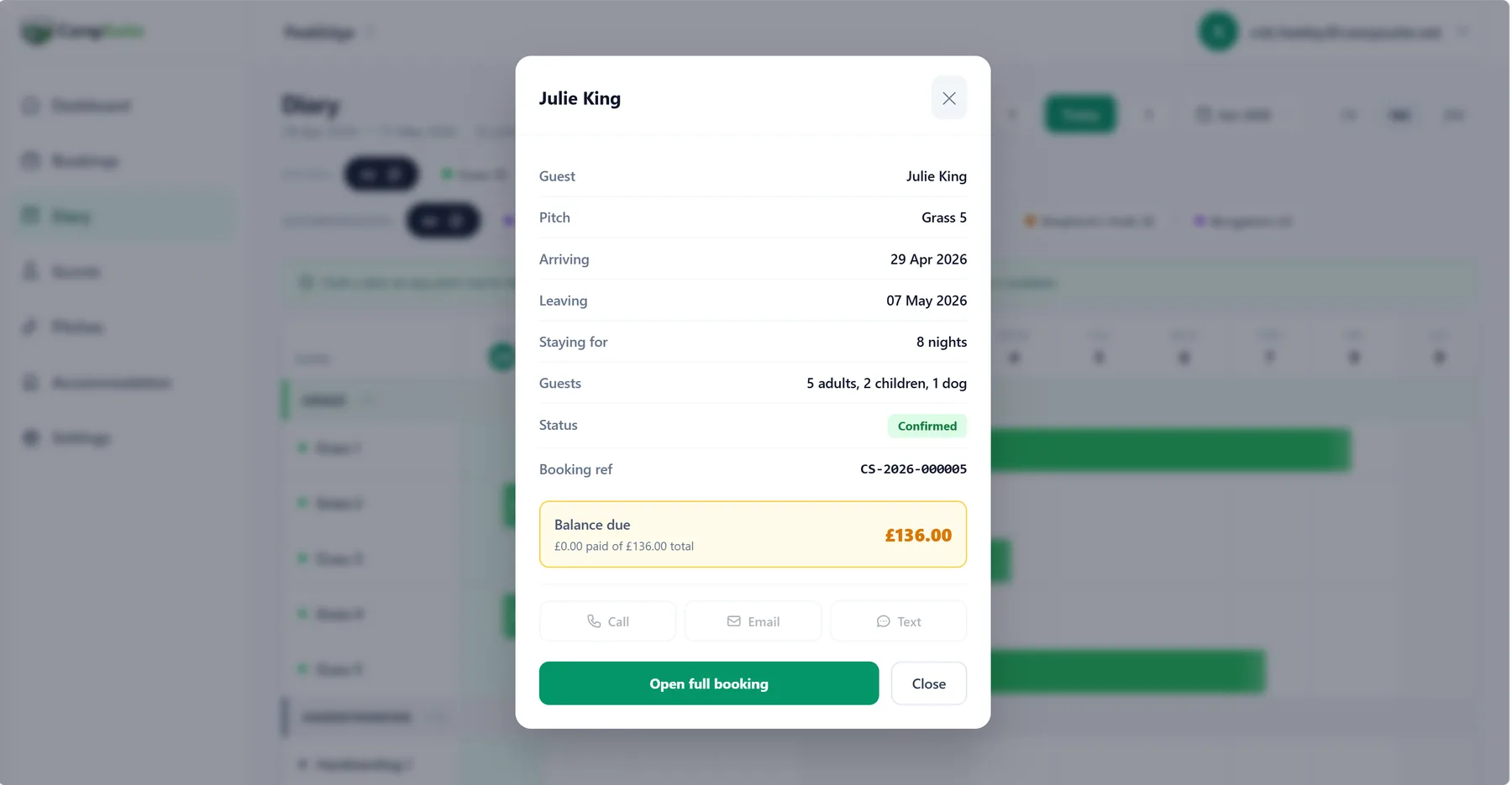
Two details matter more than the pennies. First, the Welsh levy is per person, not per pitch, so you need reliable party numbers on every booking rather than a rough headcount at the gate. Second, the split between a pitch and a unit of accommodation decides which rate you use, which is worth getting straight if you run both.
Registering: what you need and when
The duty to register starts on 1 October 2026, with a window of about six months to get it done before penalties start to apply. Registration is free and most people finish it in under 15 minutes. You will be asked for:
- your personal and business contact details
- your trading name, if you use one
- the address of the accommodation
- the type of accommodation
- the maximum number of guests
- your usual operating season
Register even if you only open in July and August, only let a field for a handful of weekends, or only take five vans at a time. The Act is written around whether you take money for overnight stays, not how often. Our full walkthrough is here: registering your Welsh campsite with the WRA.
Filing and paying the levy
Once your council introduces a levy, you collect it from guests and pay it to the Welsh Revenue Authority, which runs the whole thing nationally. How often you file depends on the size of your bill:
- £1,000 or less of levy in the first year: file once a year, or quarterly if you would rather spread it.
- More than £1,000: file quarterly.
Put that in context. A 20 pitch site averaging two adults a pitch and 60% occupancy across a 200 night season collects roughly £3,600 of levy, so most working touring parks will land in the quarterly bracket. A small CL style site letting five pitches for a short season may well stay under £1,000 and file annually.
There are penalties for late registration, late filing and late payment, which is the strongest argument for keeping the underlying numbers somewhere you can query rather than somewhere you have to count.
What to do now, before October
- Diarise 1 October 2026. Registration is the deadline that applies to every Welsh site, levy or no levy.
- Start capturing party numbers properly. A per person levy is only as accurate as your guest counts, and adults and children need to be separated because of the under 18 exemption.
- Check your pitch and unit types. Decide now which of your accommodation sits on 75p and which sits on £1.30, and set it up that way.
- Decide how you will show it. A separate line on the invoice reads as a government charge. A quietly raised pitch price reads as you getting more expensive.
- Watch your council. The register is national. Whether you ever charge a levy is a local decision.