You are not selling space, you are selling one particular hut: the one with the stove, or the one with the tub out the back. Pods, shepherd's huts, safari tents, domes and bell tents, each a bookable unit with its own photos, its own price and its own rules.
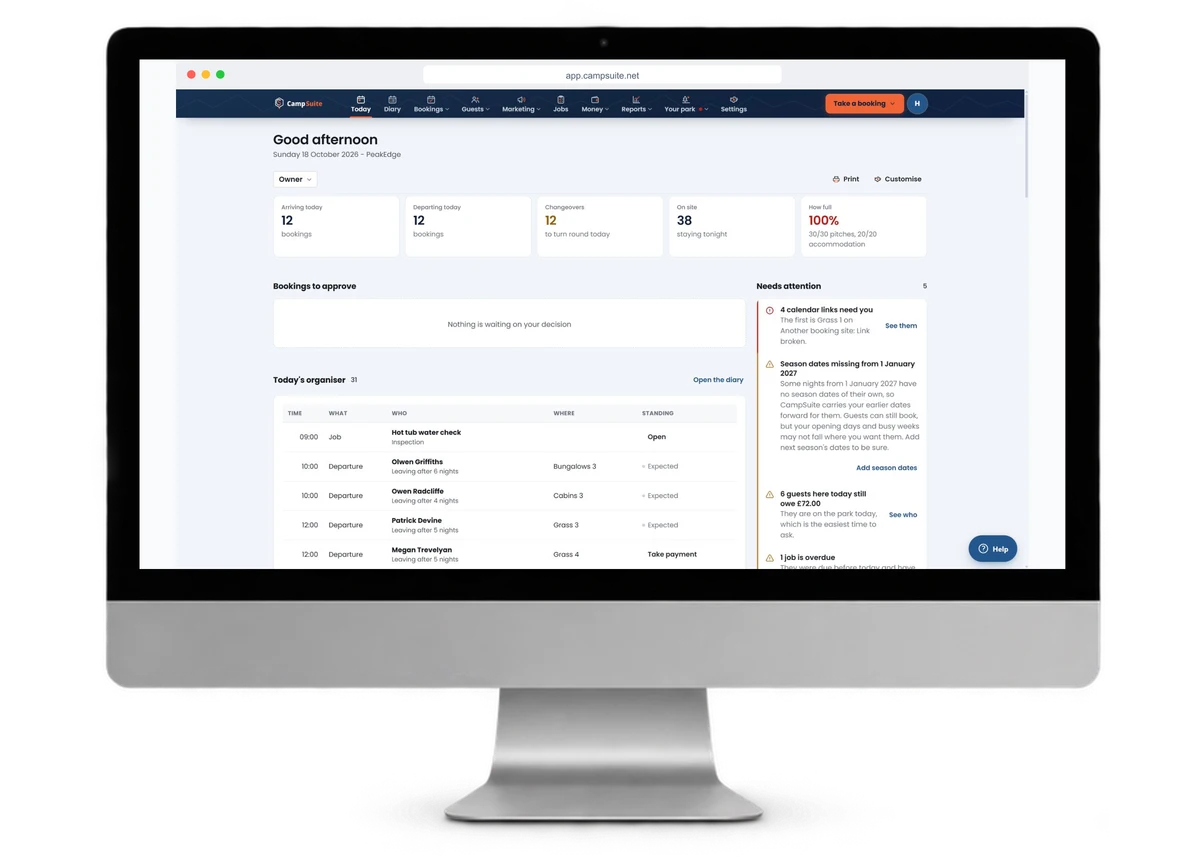
On a touring park you are selling space. On a glamping site you are selling one specific hut: the one with the view, the one with the stove, the one with the tub out the back. A guest who cannot have that one will often go and look at another site rather than take a different unit. So everything about the booking changes. Availability is per unit, stays come with rules attached, and the money involved is a good deal larger. Software written for rows of pitches tends to fudge all three.
Fifteen free pitches is a useful thing to know. One free shepherd's hut is a different kind of fact altogether. Every unit in CampSuite™ carries its own calendar, so a guest books the actual hut whose photos they were looking at, and those dates close the second the payment lands.
Two nights minimum in June. Three on a bank holiday weekend. Friday to Friday in July for the lodge that takes half a day to turn round. Set the rule once, per unit and per season, and the booking page enforces it, so nobody books a Sunday arrival you have no way of servicing.
A weekend in a cabin with a hot tub is worth many times a night on a grass pitch. That makes a deposit worth taking, a cancellation worth having a written policy about, and a balance worth collecting automatically rather than by text message the night before they travel.
Units down the side, dates across the top, bookings as coloured bars. You can see which dome is free next weekend and which lodge goes out on Sunday morning, from your phone, standing in the field in the rain.
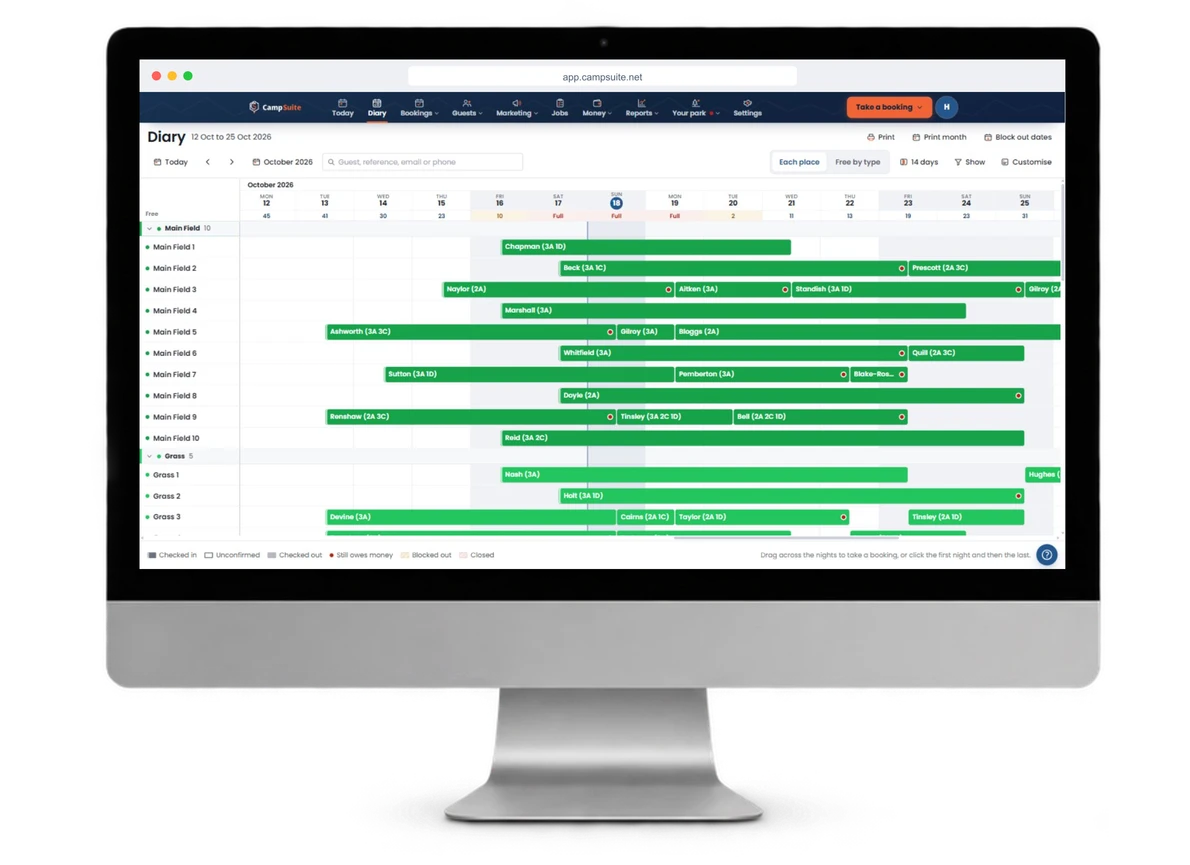
Glamping units and touring pitches in one diary, each with their own rates and their own rules.
No two units on a glamping site are the same, and the software should not pretend otherwise.
Every unit gets its own gallery, its own write up and its own list of what is inside. Glamping guests choose with their eyes.
Price the dome differently to the bell tent. Every rate you type is in euro, and that is exactly what the guest is charged.
Shoulder season rates, high summer rates, bank holiday weekends, and anything else you want to charge differently for.
Block a unit for maintenance, for the family at Christmas, or for the months you would rather not open at all.
Firewood, the tub heated for arrival, a breakfast hamper, bed linen, the dog. Chosen when they book, counted when they arrive.
Take a percentage on booking and the rest before arrival, or the lot up front. Your call, and it can differ by unit.
Which is why the booking has to be easy to make at eleven at night, on a phone, without emailing you first and waiting until Tuesday for a reply. Someone shopping for glamping usually has a few other sites open in other tabs. They book whichever one lets them finish.
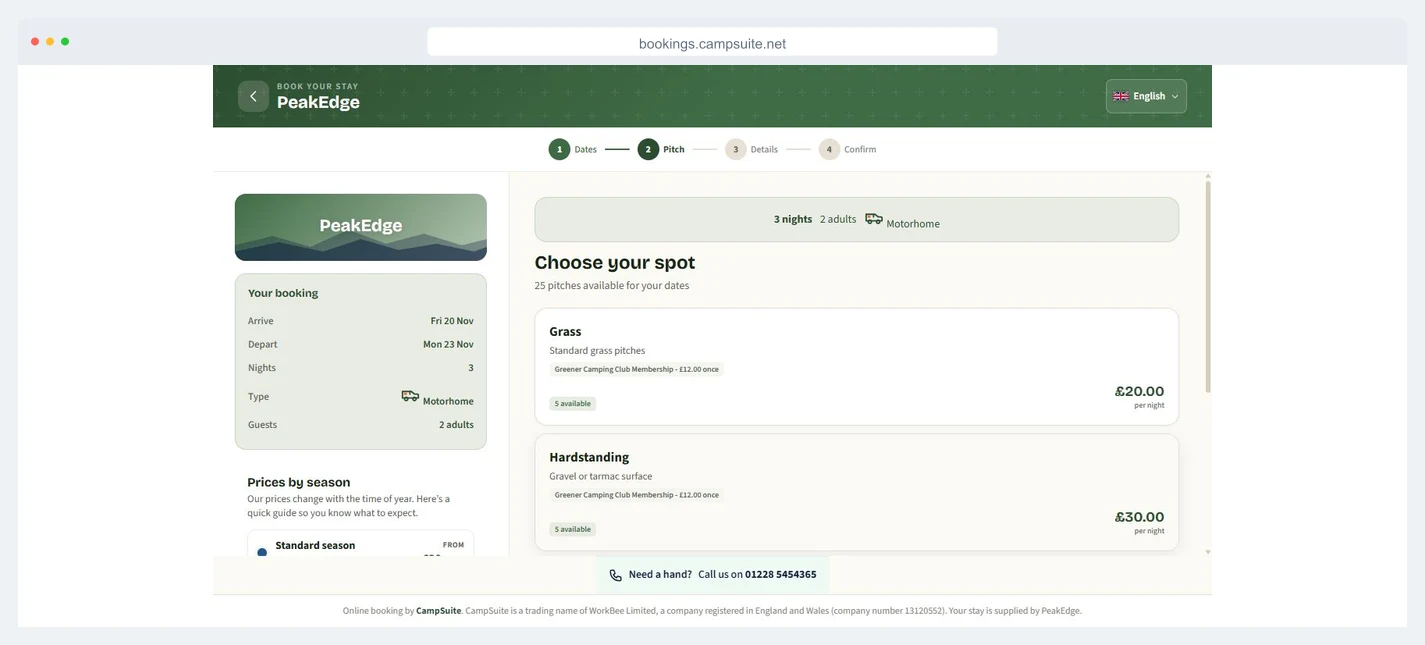
Your Stripe account is set up as an Irish business. It takes payment in euro and pays out to your own Irish IBAN. Nothing on your site is converted from another currency: the rate you type is the rate the guest pays. A deposit goes on the card when they book, the balance is collected automatically before they arrive, and neither one needs chasing.
Try a booking yourself →If your glamping started as a corner of an existing park, nothing here forces you to split it in two. Touring pitches, hardstandings, seasonals, a motorhome service point and the pods all sit in the same diary, each with their own rates, rules and arrival instructions. One system, one login, one honest set of figures at the end of the month.
Caravan and camping parks →CampSuite is free for up to 10 units and units. Not a trial, not a cut down version. The whole product.
Booking confirmation
On the free plan the guest pays a flat €1.75 when they book online, however many nights, units or people are on the booking. That matters more for glamping than for anything else. A three-night stay in a cabin with a hot tub carries exactly the same €1.75 as one night in a bell tent, so the percentage commission problem never arises in the first place. You keep every cent of your own price.
Bookings you take yourself are never charged a thing, whether that is on the phone, by email, at the gate or from a walk-in. If you would rather your guests never saw a fee at all, the "Grow" plan removes it, at €35 a month with 20 units included, then €1.50 a unit. Card processing is Stripe's own rate, paid to Stripe, and CampSuite adds nothing on top of it.
Every one of these is on every plan, the free one included.
Glamping booking software in Ireland has to earn its keep well outside July and August. A pod with a stove sells in October in a way a tent pitch never will, and the Irish weather is a fair argument for a solid roof. The units that are warm and dry are the ones still taking bookings once the touring fields have gone quiet and the ferry traffic has dropped off for the winter. Set a shoulder season rate, drop the minimum stay to two nights, and let the booking page get on with it.
Direct bookings are worth protecting. Every booking that arrives through your own website or your own booking link is one you are paying no commission on, and both the website builder and the WordPress plugin are free. When you do want to be found further afield, channel management, included from Grow, keeps the listing sites in step with your own diary, so a dome booked elsewhere closes those dates here too. Your own web address is €6 a month if you want one. The Irish price list spells all of it out.
If you are already on another system, or running the whole thing off a spreadsheet and a WhatsApp group, moving across is less painful than you are probably imagining. Send us what you have and we will import your existing bookings and guests, so you open with the diary already full rather than retyping a season by hand. If you would rather see it working before you commit, book a demo and we will walk you through a site set up like yours.
Yes. Each one is set up as its own bookable unit with its own photos, capacity, nightly rate, minimum stay, changeover day and deposit. Domes, treehouses, yurts and anything more unusual work in exactly the same way. Nothing has to match anything else.
Yes. Add a booking page to the website you already have, or build a free one, and guests can check live availability, pick a unit and pay by card. Payments run through Stripe as an Irish business, in euro, out to an Irish IBAN. The dates close the moment the payment goes through, so the same hut cannot go twice.
Per unit and per season. A lodge can be Friday to Friday through July and take any three nights in September, while the bell tents sit on a two night minimum all year. The rules are enforced on the booking page and shown in your own diary, so you are not the one having to say no on the phone.
Yes, free for up to 10 units, and Grow opens up the channels, the accounts and the season. The guest pays a flat €1.75 when they book online, and nothing at all on bookings you take yourself. If you would rather they never saw it, "Grow" is €35 a month with 20 units included, then €1.50 a unit. Park includes 100 units for €175 a month, and several parks is a Group plan.
Yes, and plenty of mixed parks do exactly that. Pods, huts, hardstandings, grass pitches and motorhome bays all live in one diary with their own rates and their own rules. You are not running two systems that quietly disagree with each other.
Every departure becomes a job sheet for whoever does the turnaround, so you always know which unit is going out today and whether the tub has been drained and refilled. Pre-arrival messages carry the hot tub instructions to the guest automatically, so nobody has to explain it twice at the gate.
About 15 minutes to set up. Free for up to 10 units, no card needed. If you would rather talk it through with a person first, ring +44 1228 928769 or email hello@campsuite.net.
 Deutschland
 España
 France
 Ireland
 Italia
 Nederland
 Portugal
 UK
UK